Key Takeaways
- AI agent security tools differ most on where the control sits: in your code, in the traffic to the model, or in the path of each tool call.
- Seven of the eight vendors here document authorizing or blocking individual tool calls. Two document an MCP gateway of their own, and three document agent identity controls.
- Cranium AI inventories agents and MCP servers from code and records the tool calls agents make, but does not authorize individual tool calls or manage agent identity.
- No vendor documents all nine criteria at Yes; Noma Security and Palo Alto Networks document eight. Documentation breadth is not depth in your environment, and most programs still pair a tool-path control with a testing and evidence layer.
An agent that reads a ticket, queries a customer database and posts a summary to chat has made three tool calls before anyone reads a word. The useful question about an agent security tool is which of those calls it can see, which it can stop, and what record it leaves for the auditor.
AI agent security tools protect software agents that plan, call tools and act on systems, often through the Model Context Protocol (MCP). The best tool depends on where you need control: an inventory built from code, inspection of model traffic, or authorization of each tool call. No vendor here documents all nine criteria publicly; Noma Security and Palo Alto Networks come closest.
Disclosure: Cranium AI publishes this guide. Cranium AI is listed first, everyone else alphabetically, and every vendor is rated on the same nine criteria from public documentation only. Corrections are welcome through our comparison hub.
What Are the Best Tools to Secure AI Agents and MCP Servers?
Ratings reflect public documentation on November 17, 2026. Yes means documented as available; Partial means narrow, rolling out, partner-delivered or covering part of the criterion; Not documented means we found no public evidence, not that the capability is absent. Not offered appears only in our own row.
| Vendor | Agent and MCP discovery | Tool-call visibility | Tool-call authorization | MCP gateway or proxy | Agent identity | Runtime prompt protection | Adversarial testing | Config and supply-chain scanning | Compliance evidence |
|---|---|---|---|---|---|---|---|---|---|
| Cranium AI (Cranium ONE) | Partial | Yes | Not offered | Not offered | Not offered | Yes | Yes | Yes | Yes |
| Check Point (AI Agent Security, includes Lakera) | Partial | Yes | Yes | Not documented | Not documented | Yes | Yes | Not documented | Partial |
| Cisco (AI Defense) | Partial | Yes | Yes | Partial | Not documented | Yes | Yes | Yes | Partial |
| HiddenLayer (AI Security Platform) | Partial | Partial | Yes | Not documented | Not documented | Yes | Yes | Yes | Partial |
| Noma Security | Yes | Yes | Yes | Partial | Yes | Yes | Yes | Yes | Yes |
| Palo Alto Networks (Prisma AIRS) | Partial | Yes | Yes | Yes | Yes | Yes | Yes | Yes | Partial |
| Pillar Security | Yes | Yes | Yes | Partial | Not documented | Yes | Yes | Partial | Yes |
| Zenity (AI Security Platform) | Yes | Yes | Yes | Yes | Yes | Yes | Partial | Partial | Partial |
For model scanning and AI-BOM criteria, see our comparison of the best AI security platforms, which rates Cranium AI Partial on agents and MCP for the same reason.
Nine Criteria for Comparing AI Agent Security Tools
Two tools sold as “MCP security” can do different jobs; these criteria separate them.
| Criterion | What we looked for |
|---|---|
| Agent and MCP discovery | Inventories agents, tools and MCP servers wherever they run. Partial if from one source only. |
| Tool-call visibility | Shows which tools an agent called in a session. |
| Tool-call authorization | Allows, denies or modifies a specific tool call by policy before it executes. |
| MCP gateway or proxy | A component in the path of MCP traffic that returns a verdict per call. |
| Agent identity | Inventories the identities and privileges agents act with. |
| Runtime prompt protection | Detects or blocks prompt attacks and sensitive data in live prompts and responses. |
| Adversarial testing | Runs automated attacks against models, applications or agents before release. |
| Config and supply-chain scanning | Scans agent configs, MCP servers, model files or dependencies before production. |
| Compliance evidence | Maps evidence to the EU AI Act, NIST AI RMF and ISO 42001. Partial if only some, or only threat taxonomies such as OWASP or MITRE ATLAS. |
Where Does the Control Sit? Three Architectures
Most differences come from where the product sits in the agent’s path.
In the code and configuration
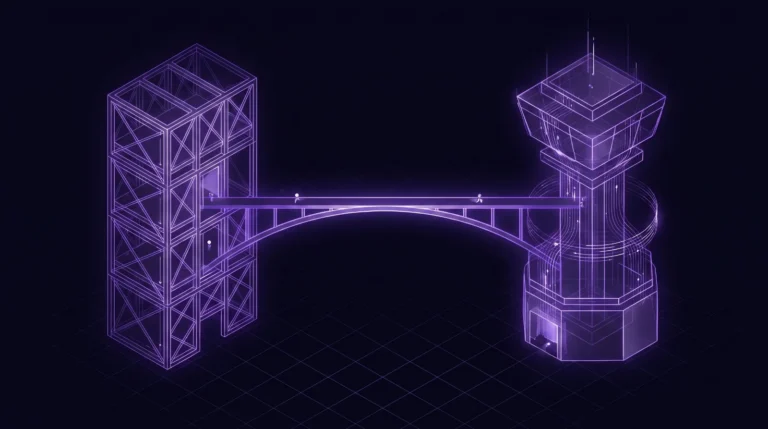
Scanners read repositories, agent definitions and config files before anything runs. They show which agents exist, which tools and MCP servers they are wired to and whether a config file hides instructions. They see nothing at runtime and miss agents outside the repositories you connect.
In the model traffic
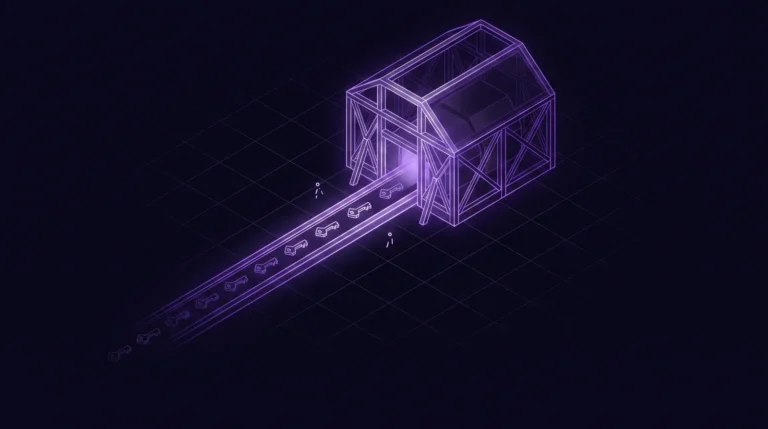
A layer between the application and the LLM inspects every prompt and response. It is strong on jailbreaks and sensitive data, and a reliable witness of which tools the model asked for. Whether a call executes is decided elsewhere: in the agent runtime, a gateway or a hook.
In the tool path
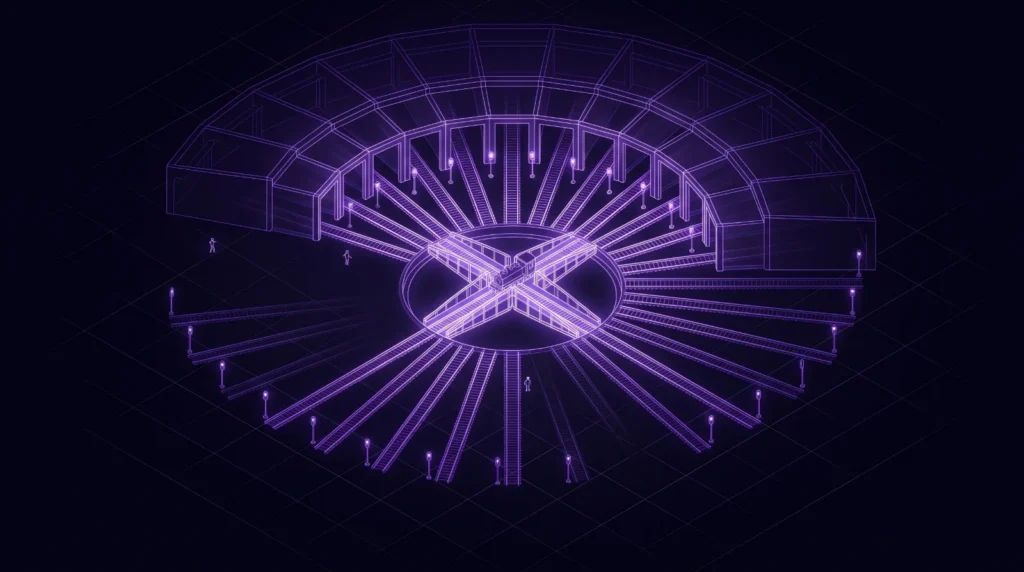
Gateways, proxies and agent hooks sit between the agent and the tool. They see the call with its arguments before it runs and can allow, deny or modify it. Their limit is coverage: a server an agent reaches directly is invisible to them. Our post on MCP server trust boundaries explains why authenticating a server is not the same as authorizing a call.
Vendor by Vendor: Best For and Consider Something Else If
Cranium AI (Cranium ONE)
AgentSensor™ scans code repositories for agents built on six frameworks, including LangGraph, CrewAI and OpenAI Agents, and lists each agent’s tools, handoffs, guardrails and MCP servers in the AI-BOM. Cranium Guardian inspects traffic between the AI application and the LLM per interaction, can block or modify prompts and responses in Enforce mode, and its Tool Inspector shows the tool calls an event made. The Adversarial Inputs Detector scans agent config files such as agents.md and claude.md, Arena™ runs adversarial testing, and evidence maps to the EU AI Act, NIST AI RMF and ISO 42001.
Best for: teams that need to inventory agents from code, record what they do, test them and prove it to auditors from one platform.
Consider something else if: you need to allow or deny individual tool calls, an MCP gateway or agent identity management. Cranium AI observes and records tool calls; it does not authorize them, and it discovers MCP servers from source code, not live traffic.
Check Point (AI Agent Security, includes Lakera)
Check Point announced its Lakera acquisition in September 2025. Its agent page documents identifying agents on supported cloud and low-code platforms, allow and deny controls over which tools and MCP servers agents use, and in-context evaluation of tool calls to block unsafe or unauthorized behavior, plus detection of prompt attacks and indirect injection. Its AI Red Teaming attacks models and agents with techniques mapped to OWASP risks.
Best for: Check Point customers who want agent runtime guardrails, including tool and MCP allow lists, from a vendor they already run.
Consider something else if: you need agent identity, config or model-file scanning, or EU AI Act, NIST AI RMF or ISO 42001 mapping, which its public pages do not document.
Cisco (AI Defense)
Cisco’s AI Defense data sheet documents runtime inspection of agent actions and tool calls in MCP traffic, runtime policies that enforce tool allowlists and blocklists, scanning of MCP servers, model files and repositories, and red teaming of models, applications and agents. A February 2026 blog announced an MCP Catalog that discovers MCP servers across registries, noting many described features remain in varying stages of development. Findings map to MITRE ATLAS, the OWASP Top 10 for LLMs and the NIST AI RMF.
Best for: Cisco and Splunk customers who want MCP visibility and inspection inside their network security stack.
Consider something else if: you need agent identity controls, a documented MCP gateway, or EU AI Act and ISO 42001 mapping.
HiddenLayer (AI Security Platform)
Agentic Runtime Security screens tool calls and tool results and replays sessions; its docs say it is rolling out by tenant. Agent Harness Security uses Claude Code, Cursor and GitHub Copilot CLI hooks to block an action before a tool runs, including a pre-MCP-tool gate in Cursor. Discovery covers cloud assets including Bedrock AgentCore, its platform page documents model scanning for malware and backdoors, and reports show MITRE ATLAS tactics.
Best for: teams that want model-scanning depth and coding-agent controls from one specialist. See Cranium AI vs. HiddenLayer.
Consider something else if: you need an MCP server inventory, an MCP gateway, agent identity or EU AI Act and ISO 42001 mapping.
Noma Security
Agent Access Control, launched in June 2026, builds a registry of agents, MCP servers and tools and lets teams approve or block individual tools. AI-DR enforces per-agent and per-tool policy and deploys through infrastructure a customer already runs, including agent hooks, AI and MCP gateways, EDR or MDM and APIs; it can block, mask, steer or trigger a killswitch. The launch release says each agent gets a distinct, attributable identity when it connects to MCP servers and tools. It scans MCP servers and open-registry models, red teams in CI/CD, and maps to the EU AI Act, NIST AI RMF and ISO 42001.
Best for: agent-heavy programs that want a registry, per-tool policy and compliance evidence from one vendor. See Cranium AI vs. Noma Security.
Consider something else if: you want agent security inside a network, endpoint or cloud platform you already run, or an MCP gateway from the same vendor; Noma documents enforcement through gateways and hooks you already run.
Palo Alto Networks (Prisma AIRS)
The Prisma AIRS MCP Server intercepts tool invocations and returns an allow or block verdict, logging each call. Agent Identity Security gives each registered agent a unique Agent ID and OAuth 2.1 credentials, with policies on which users, through which agents, can call which MCP tools, enforced by the Prisma AIRS AI Gateway, generally available since July 16, 2026. Agent Discovery covers Bedrock and Azure AI Foundry agents and their tools, model scans are documented, and AI Red Teaming tests agents with techniques mapped to the OWASP Top 10 and NIST AI RMF.
Best for: enterprises standardized on Palo Alto Networks that want an agent gateway, identity and testing from one platform vendor.
Consider something else if: you need EU AI Act or ISO 42001 mapping, or an AI security vendor independent of your network platform.
Pillar Security
Agentic Endpoint sits in the pre-tool hook of Claude Code, Codex CLI and Cursor to block risky commands before they execute, and scores local and remote MCP servers against a catalog of more than 23,000. Runtime guardrails connect through LiteLLM, Kong, TrueFoundry and other gateways. Red Graph runs multi-turn attacks through an application’s own interface, mapped to NIST’s AI RMF, and reporting covers the EU AI Act and ISO 42001. Vanta signed a definitive agreement to acquire Pillar Security on November 9, 2026; no close has been announced.
Best for: AppSec teams securing coding agents and MCP servers on developer machines. See Cranium AI vs. Pillar Security.
Consider something else if: you need agent identity or a dedicated MCP gateway; Pillar’s MCP controls run through endpoint hooks and partner gateways.
Zenity (AI Security Platform)
MCP Security puts every MCP server and tool in one view with the agents that use them, routes agents through one gateway URL, and allows, modifies or blocks a tool call on live context. Runtime Boundaries let an action through, block it or shut the agent down across Copilot, ChatGPT Enterprise, Agentforce and Bedrock. Agent identities are mapped to the OWASP Non-Human Identity Top 10, and threats to OWASP LLM and MITRE ATLAS. Adversarial testing is Partial: Zenity Labs publishes free, open-source tools in its Security Assessment Hub for a red-team approach to Microsoft 365, Copilot Studio and Power Platform, separate from the platform.
Best for: enterprises running many agents across SaaS copilots, coding agents and homegrown builds that need action-level enforcement and identity. See Cranium AI vs. Zenity.
Consider something else if: you need automated adversarial testing built into the platform, model-file scanning, or EU AI Act, NIST AI RMF or ISO 42001 mapping.
How Do I Choose an AI Agent Security Tool?
Feature lists converge. Placement and evidence do not.
- Map where tool calls are decided: frameworks in your code, copilots inside SaaS platforms, coding agents on laptops, local and remote MCP servers. Each needs a different control position.
- Decide whether you need a witness, a gate or both: a witness records which agent called which tool in which session; a gate decides whether the call runs. A blocked call with no record is as hard to defend in an audit as an allowed call nobody saw.
- Test the bypass: ask what happens when an agent reaches an MCP server directly, and whether the control fails open or closed.
- Ask how verdicts are produced: does the same input always get the same verdict, and can an analyst see why it fired?
- Run it on your own agents: count how many of your real tool calls each product saw, and ask for the evidence export an auditor would receive.
Where Cranium AI Fits
For agents, Cranium ONE is the system of record rather than the gate. The AI Trust Loop runs Discover, Observe, Govern, Secure, Prove:
- Discover: AgentSensor inventories agents, tools and MCP servers from your repositories into the AI-BOM, exportable as CycloneDX or SPDX.
- Observe: Cranium Guardian inspects each interaction between the AI application and the LLM, and Tool Inspector shows the tool calls made.
- Govern: Profiles set Block, Modify or Pass per signal, and compliance scoring maps AI systems to the EU AI Act, NIST AI RMF and ISO 42001.
- Secure: Enforce mode can block jailbreaks and direct command injection inline with deterministic, non-generative verdicts; Arena runs adversarial tests before release.
- Prove: AI Card™ transparency reports carry AI-BOMs, framework results and vulnerability data to auditors and customers.
Authorization of individual tool calls and agent identity sit outside Cranium ONE. If you need them, pair Cranium AI with a gateway or identity control, and use the agentic AI security overview to map which risks each layer covers.
Frequently Asked Questions
What is MCP server security?
MCP server security is the set of controls that decide which Model Context Protocol servers agents may connect to, what their tools may do, and how each call is inspected and recorded. It spans server discovery, tool-definition review, vulnerability scanning and a policy decision point for calls, usually a gateway, proxy or agent hook.
Can a prompt-level AI firewall stop a malicious tool call?
Partly. A layer between the application and the model can catch the jailbreak that leads to a bad tool call and record which tool the model requested. Allowing or denying the call itself needs a control in the tool path, such as an MCP gateway or a hook that runs before the tool executes.
Does Cranium AI block agent tool calls?
No. Cranium Guardian blocks or modifies prompts and responses between the AI application and the LLM, and its Tool Inspector shows the tool calls an agent made. It does not authorize or deny individual tool calls and does not run an MCP gateway. Cranium AI discovers MCP servers from source code, not live traffic.
Do I need an MCP gateway if I already have runtime prompt protection?
If your agents take actions with real permissions, usually yes. Prompt protection reduces how often an agent is manipulated; a gateway limits what a manipulated agent can do. Mature programs run both and keep one shared record of what happened.
See Cranium AI in Action
See how Cranium ONE inventories your agents and MCP servers from code and shows the tool calls they make. cranium.ai/get-a-demo/
Sources
- Cranium AI docs: AgentSensor overview
- Cranium AI docs: Guardian overview
- Cranium AI docs: Event details and Tool Inspector
- Cranium AI docs: Adversarial Inputs Detector
- Cranium AI docs: Arena overview
- Check Point: AI Agent Security
- Check Point: AI Security
- Check Point: Lakera acquisition (September 16, 2025)
- Cisco: AI Defense for the agentic era (February 10, 2026)
- Cisco: AI Defense product page
- Cisco: AI Defense data sheet (updated October 26, 2026)
- HiddenLayer docs: Agentic Runtime Security overview
- HiddenLayer docs: Agent Harness architecture
- HiddenLayer docs: Discovery release notes
- HiddenLayer docs: Reports overview
- HiddenLayer: Platform
- Noma Security: Agentic Access Control launch (June 2, 2026)
- Noma Security: AI-DR
- Noma Security: AI Red Teaming
- Noma Security: AI supply chain security
- Noma Security: AI compliance
- Palo Alto Networks docs: Understanding the Prisma AIRS MCP Server
- Palo Alto Networks docs: Agent Identity Security
- Palo Alto Networks: Prisma AIRS AI Gateway
- Palo Alto Networks docs: Agent Discovery
- Palo Alto Networks docs: AI supply chain security
- Palo Alto Networks: Prisma AIRS AI Red Teaming
- Pillar Security: Agentic Endpoint
- Pillar Security: Runtime Guardrails
- Pillar Security: Red Graph Suite (August 6, 2026)
- Pillar Security: Governance and Compliance
- Pillar Security: Vanta to acquire Pillar Security (November 9, 2026)
- Zenity: MCP Security
- Zenity: Runtime Boundaries
- Zenity: Agentic Identity and Access Management
- Zenity: AI Detection and Response
- Zenity: AI Security Posture Management
- Zenity: Security Assessment Hub
Last verified: November 17, 2026. Product names and trademarks belong to their owners and are used for identification only. No vendor reviewed or endorsed this guide.