Because AI systems don’t behave like traditional software, attackers have already adapted.
Traditional cybersecurity tools were built for predictable systems: static code, clear intent, and behavior that doesn’t change after deployment. AI breaks those assumptions. Models are shaped by data, respond dynamically to inputs, and can be manipulated at runtime through natural language alone, without altering a single line of code.
That’s why legacy network, application, and identity tools often miss AI-specific risks. Prompt injection, data poisoning, model extraction, and behavioral drift don’t look like traditional attacks. From the outside, everything appears normal. Under the hood, the system may already be making unsafe decisions or exposing sensitive information.
As AI becomes embedded across enterprise workflows, the gap between what traditional security can see and what actually matters continues to widen. Securing AI requires recognizing it as a fundamentally different class of system, one that demands visibility into models, data, and behavior, not just infrastructure and code.
How Security Drifted Out of Alignment With AI
Most enterprise security stacks evolved around a stable mental model: code is written by humans, deployed once, and behaves consistently unless compromised. Network tools monitor traffic patterns. AppSec tools scan source code. IAM enforces permissions based on static roles.
AI doesn’t fit into any of those boxes. A model’s behavior can change without a single line of code being modified. A system can be manipulated after deployment solely through natural language. And risk can emerge gradually through feedback loops, data shifts, or model drift rather than a single exploit.
This mismatch is why many AI-related incidents don’t appear to be “breaches” at first. They look like anomalies. Or edge cases. Or unexplained behavior that’s easy to dismiss, until the impact becomes undeniable.
Where Traditional Security Fails in Practice
Runtime Manipulation Happens Outside the Code
Static application security tools are good at identifying known vulnerability patterns in source code. What they cannot see is how AI behavior is influenced after deployment.
Prompt injection is the clearest example. An AI system can pass every pre-deployment security check and still be coerced into unsafe behavior at runtime using carefully crafted inputs. From a logging perspective, nothing looks abnormal. From a governance perspective, the system has violated its intended constraints.
Traditional tools were never designed to interpret intent embedded in natural language.
Network Monitoring Can’t See Model Abuse
Firewalls and network monitoring tools focus on traffic volume, protocols, and destinations. AI attacks don’t announce themselves that way.
Model extraction attacks use legitimate inference queries. Data leakage can occur through authorized APIs. Poisoned updates can arrive through trusted supply chains. From a networking perspective, this activity looks normal.
The problem isn’t a lack of data; it’s a lack of semantic understanding. Traditional network security can tell you where traffic goes, not what the model is learning or revealing.
Identity Controls Break Down at AI Scale
Identity and access management works best when permissions are narrow and predictable. AI systems often require broad access to data and tools in order to function at all.
Over time, this leads to over-permissioned models and agents. When something goes wrong, the blast radius is larger than teams expect. An AI agent with excessive privileges doesn’t just expose one system. It can move across data stores, services, and workflows faster than a human attacker ever could.
IAM was built to govern people. AI behaves very differently.
Data Security Ends Too Early
Traditional data security programs focus on where data is stored, who can access it, and whether it’s encrypted. For AI systems, that’s only the beginning.
Training data shapes model behavior in ways that are persistent and difficult to reverse. Subtle poisoning during training or fine-tuning can introduce bias, backdoors, or unsafe behavior that only appears under specific conditions.
Once that data is absorbed into a model, the risk travels with it. Traditional data controls don’t track that lineage.
Supply Chain Visibility Stops at the Model Boundary
Software supply chain security has made progress with SBOMs and dependency tracking. AI supply chains are broader and far less visible.
Modern AI systems depend on foundation models, open-source weights, fine-tuning datasets, plugins, APIs, and external services. Without an AI Bill of Materials (AI-BOM), organizations often cannot trace where a model came from, what influenced it, or which downstream systems rely on it.
That opacity creates ideal conditions for attackers and uncomfortable conversations with regulators.
Monitoring Assumes Systems Don’t Change
Traditional monitoring expects stable behavior. AI doesn’t stay stable.
- Model behavior shifts as data and usage patterns change.
- Feedback loops quietly amplify edge cases.
- Adversaries can steer behavior over time solely through inputs.
- Retrieval, prompts, and tool use change over time.
Without AI-aware monitoring, drift looks like noise, until it’s not. When issues surface, customers or regulators are often the first to notice.
The Core Issue: Security Without Context
At its core, traditional cybersecurity fails AI because it lacks context. It doesn’t understand what the model is supposed to do, how its behavior evolves, or how decisions are shaped by data and interactions over time. As a result, many AI incidents bypass security controls entirely, not because teams were negligent, but because their tools were never designed for systems that learn, infer, and adapt.
What Effective AI Security Looks Like Instead
Securing AI systems requires expanding security beyond infrastructure and code.
Organizations need visibility into which AI systems exist, how they’re used, and what they depend on. They need to test AI behavior the way attackers do, monitor models continuously in production, and document governance decisions in a way that withstands scrutiny.
This isn’t about replacing traditional security. It’s about extending it into a layer that those tools can’t reach.
Where Cranium Fits Naturally
Cranium was built for exactly this gap.
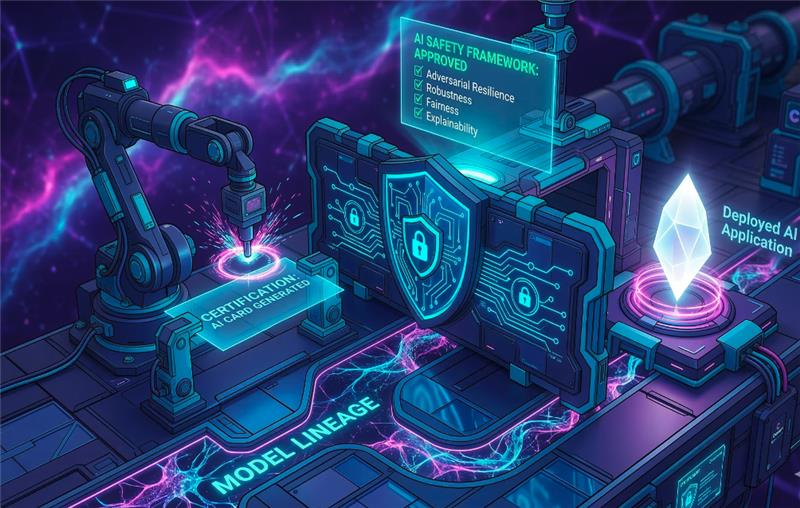
It provides visibility into AI systems and their dependencies, including discovery and AI Bills of Material (AI-BOMs), so teams can understand what exists and what it relies on. It enables adversarial testing through Cranium Arena to evaluate AI behavior, including testing internal and third-party models across the AI supply chain. And it creates governance artifacts, such as the AI Card, that make AI use explainable and auditable.
The goal isn’t more alerts. It’s confidence, grounded in evidence that AI systems are behaving as intended.
Bottom Line
Traditional cybersecurity tools didn’t fail. They simply weren’t built for AI.
As models, data, and agents become foundational to enterprise operations, security has to evolve with them. The organizations that succeed won’t be the ones that bolt AI onto legacy controls and hope for the best.
They’ll be the ones who recognize AI as a fundamentally different class of system, and secure it accordingly. That’s the shift Cranium enables.
Explore how Cranium helps enterprises govern, test, and secure AI systems at scale: https://cranium.ai